
Mia Kami
Shirley (she/her) and Araceli (she/her) are the artist-duo of Cooperativa Visual, an interdisciplinary DIY collective of Bolivian women. In the past few years, they have been working with themes relating to the preservation of memory, through the mediums of image and sound to encourage critical reflections and new ways of thinking. They also work with a variety of communities who are being affected by extractivisms – extraction including deforestation and mining – within their territories and also with women whose lives have been damaged by the structural violence of patriarchy.
Sarah Kaddoura
Saadia Batool (she/her) is a visual artist from Pakistan. She graduated with a distinction in Fine Arts from the National College of Art Lahore in 2022, majoring in Painting. She has exhibited her work in the Young Artists Exhibition at Alhamra Lahore in 2019 and 2020. She has showcased her work in a group show at Tagheer Art Gallery, Lahore. She was part of a group show “Asli Contemprorary” at Numaish Gah, Lahore. She also was part of a four-person show “Fine China” at Artescape Gallery Islamabad. She exhibited in the show “Broadcast Volume 1” art O Art Space, Lahore. She was part of the show “In the realm of madness” at Gallery Full Circle Karachi. She exhibited in a group show at 8B2 Gallery Islamabad in January. Batool was part of a Inception Grant show 2024 and exhibited at Triveni Kala Sangam New Dehli, India.
Introducing 2023’s Artist Changemakers
Global Fund for Women welcomes nine new Artist Changemakers to our creative community of artists and activists making art at the forefront of feminist movements everywhere. Our 2023 cohort of artists are awarded a one-time unrestricted grant to support their work, struggles, aspirations, and lives as critical and creative movement builders.
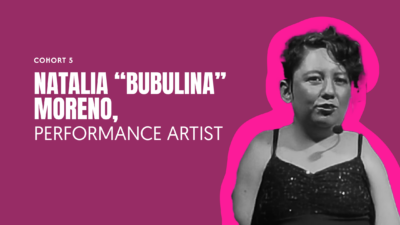
Natalia “Bubulina” Moreno
Natalia “Bubulina” Moreno Rodriguez (she/her) is a woman with a physical disability, a social communicator, a human rights advocate and educator, a Latin American consultant, and an expert on the intersectionality between disability, gender, and sexual diversity. She loves body language, dance, and theatre, and has knowledge of Integrated Contemporary Dance. She creates and produces different types of art (dance, theatre, and performance), including the award-winning performance monologue called “Tentacles,” presented several times in different cities in Colombia, and also in countries such as Mexico and Nepal.
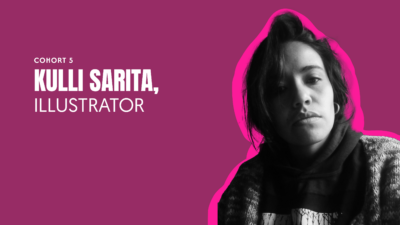
Kulli Sarita
Kulli Sarita (she/her) is an illustrator in Cochabamba, Bolivia. Kulli Sarita has deep connections and collaborations with women’s organizations and collectives tied to the principles of anarchism, indianista movements, and feminism. Through her work she incorporates her lived experience as an Indigenous woman in Cochabamba, her academic background in visual communication, and her studies in engraving and printmaking, while also being inspired by her family’s work in the agricultural sector to establish connections between urban and rural experiences.
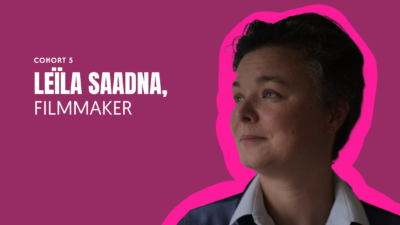
Leïla Saadna
Leïla Saadna (she/her) is a documentary filmmaker, visual artist, and director of photography who lives and works in Algiers, Algeria. Her films deal with exile and the struggles of people impacted by migration as well as the resistance of women and marginalized people in African and diasporic contexts from a feminist point of view.
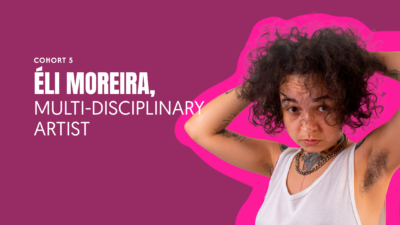
Éli Moreira
Éli Moreira (they/them) is a multi-disciplinary artist, cultural producer, and a gender and sexual dissident currently living and working in Salvador, Bahía, Brazil. Their art research and practice blends popular contemporary Brazilian music, electronic music, vocal sampling, and organic and synthesized instrumentation with creative writing, collage, and experimental photography to delve in subjects such as gender, dissidence, sexuality, and love.
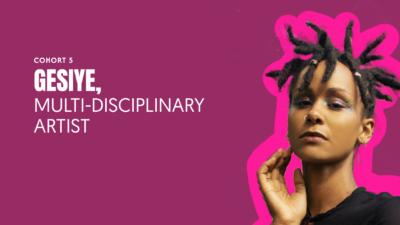
Gesiye
Gesiye (she/they) works with individuals and communities using performance, tattooing, installation, and image-making to explore embodiment and storytelling as forms of liberation. Raised in a Nigerian-Trinidadian family with a deep connection to divination and somatic healing practices, Gesiye uses an intuitive practice rooted in themes of belonging and examines the sociocultural symbols and power dynamics that impact our relationships with self, state, and land.
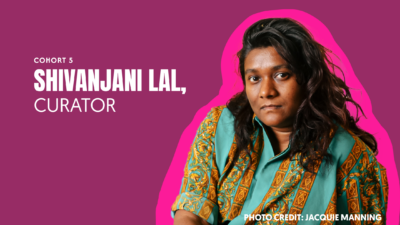
Shivanjani Lal
Shivanjani Lal (she/her) is a Fijian-Australian artist and curator whose work uses personal grief to account for ancestral loss. Recent works have used storytelling, objects, and video to account for lost histories and explore narratives of indenture and migratory histories from the Indian and Pacific Oceans. In Lal’s work, reading and objects guide audiences through lived and imagined narratives that attempt to decipher what is lost and the possibilities of futures.

Anonymous Artist
The artist opted to remain anonymous. In the spirit of practicing feminist ethics of care and safety, we offer anonymity for all Artist Changemakers. Artist Changemakers may choose to remain anonymous for a variety of reasons in line with the multiplicities of their creative practices.